Tuesday, January 23, 2018

Backdoor Revolution- The ADU Book

In 2010, when I started this blog, I had no idea it was going to lead to this.

But today, I'm proud to release a book into the world called Backdoor Revolution-The Definitive Guide to ADU Development. It has taken me 2.5 years to write-a labor of love.

The trajectory of this ADU book began with this lowly blog.

This blog translated into a class.

That class eventually made me realize there was a need for other homeowners who weren't in Portland, to be able to accces information about how to develop an ADU.

Then, in editing AccessoryDwellings.org, which I started with two other ADU afficianados in 2012, I began to pay attention to the bigger ADU trends, or lack thereof, outside of just a small handful of cities in the country.

I witnessed city after city floundering in its regulatory attempts to foster ADUs. I knew what they were doing wrong, but who was I to tell them so. Eventually, seeing this pattern of failure made me fed up. That's when I knew it was time to write a book.

This book is an attempt to help those who want to help themselves. It is not an attempt to convince others of the merits of ADUs. It is an attempt to help those who are already convinced of the merits of ADUs, to actually build one.

It is simultaneously an attempt to help cities who are hitting their heads against the wall with futile effort to induce more ADUs. It is not an attempt to convince cities that they should foster ADUs. Rather, it is an attempt to help cities and ADU advocates to accomplish their aspirations of fostering more ADUs.


If this describes you, you will get great value from reading this book. You can buy the ADU book here

Friday, June 30, 2017

Landscaping Revisited

Maybe I should have incorporated landscaping into my initial ADU development process after all.

Because it's now been six years since I finished the ADU, and I've just now gotten around to landscaping it in 2017. It took six years, but I'm finally spending a lot of time in the back yard this summer, and I love finally having a garden that we can enjoy.


Before:

After: 


Once we had removed a large dying Cherry tree from the yard last year because, it opened up the opportunity for a much more sunlight to penetrate the yard than it ever had before. The cedar fence that separated my property from my neighbors was old and rotting and desperately needed to be replaced. Lastly, I wanted to plant a new tree and the time seemed right to overhaul the landscape of the entire property. So, I bit the bullet, and hired a garden designer who helped guide me through that process.

I managed to do all the work for roughly $8K out of pocket, plus approximately $3K in sweat equity. The job required a surprising amount of work: probably 250-300 hours total. I did roughly 80 hours of work over a 2-week period, and hired help for much of it.

First, we removed the existing rotting fence, and built a new 80ft cedar fence ($2K). For landscaping, the first stage was to remediate the yard material which involved removing a lot of dirt that had weeds in it. Weed barrier was then laid down, and about 6 cubic yards of new soil was imported to shape a slight berm where the plants would go along the fence ($3K). The lawn size was reduced, then gravel was imported and spread out on top of more weed barrier. Then, we greatly expanded the footprint of a modest stone patio and created a walkway between the ADU and the main house ($1K). The garden designer purchased $2K of new plants, groundcovers, shrubs, perennials, ferns, and potted plants and we meticulously planted them in the berms. Lastly, cedar mulch was spread out on top of the soil between the plants.

Here's a short photo album of the landscaping process.

I've never had a green thumb, so I relied on the designer's solid vision of how the garden's plants would evolve over time---how much they would grow in height and how their colors would intermingle and compliment one another. The garden designer was very studious about the light conditions, and clued in to which plants would thrive and where.

While the plants are currently spaced 2-3ft apart, they'll eventually grow in to varied heights, and be lush, colorful, and flower at different points throughout the year. I'm watering the plants daily and it's thrilling to see how they are instantly thriving in this new fertile sun-rich environment.

In other ADU news, I've just purchased an investment property in my neighborhood. This is what it looks like now; I've got my work cut out for me.

Whereas this blog (pdxadu.blogspot.com) has focused on the development of a detached new construction ADU as our primary residence, this new project is going to be focused on the conversion of a daylit basement ADU as an investment property. It's a very different type of ADU project than my first one, and I'm expecting to learn a lot in the process and I invite you to come along for the ride. 

As with my first ADU, I'll be cataloging the development decisions, as well as the costs and the permitting and regulatory process on a new ADU focused website called BuildinganADU.com. I'll be actively posting to the ADU Odyssey blog for at least the next six months on a regular basis. 

If you've enjoyed reading pdxadu.blogspot.com, you'll love digging through the new site which includes a trove of actionable information, tips, ADU images, ADU cost information, small space design best practices, and much more. 
The ADU Odyssey blog is primarily a video blog that delves into the development process of a daylit-basement attached-garage conversion ADU

Tuesday, October 25, 2016

Landscaping Revised

The Cherry Tree that both plagued and complimented the backyard where we built our ADU, was starting to die. It was with mixed emotions that I hired an arborist to cut it down.

On the one hand, I had explicitly bought this property and built the ADU partly because of the allure of having a large tree outside my bedroom window. On the other hand, after living in the ADU for several years now, I've come to realize that I wanted more natural light. While it doesn't rain all the time in Portland, it is overcast a lot. And, the tree to the south of the ADU was the biggest culprit in blocking natural light.

It's sad to look out the window and see a gigantic, organic mass missing from the yard. On the other hand, seeing more sky is a pleasure. And indeed, with the tree now gone, the ADU does get more natural light.


Also, I can't play hookie anymore. :(


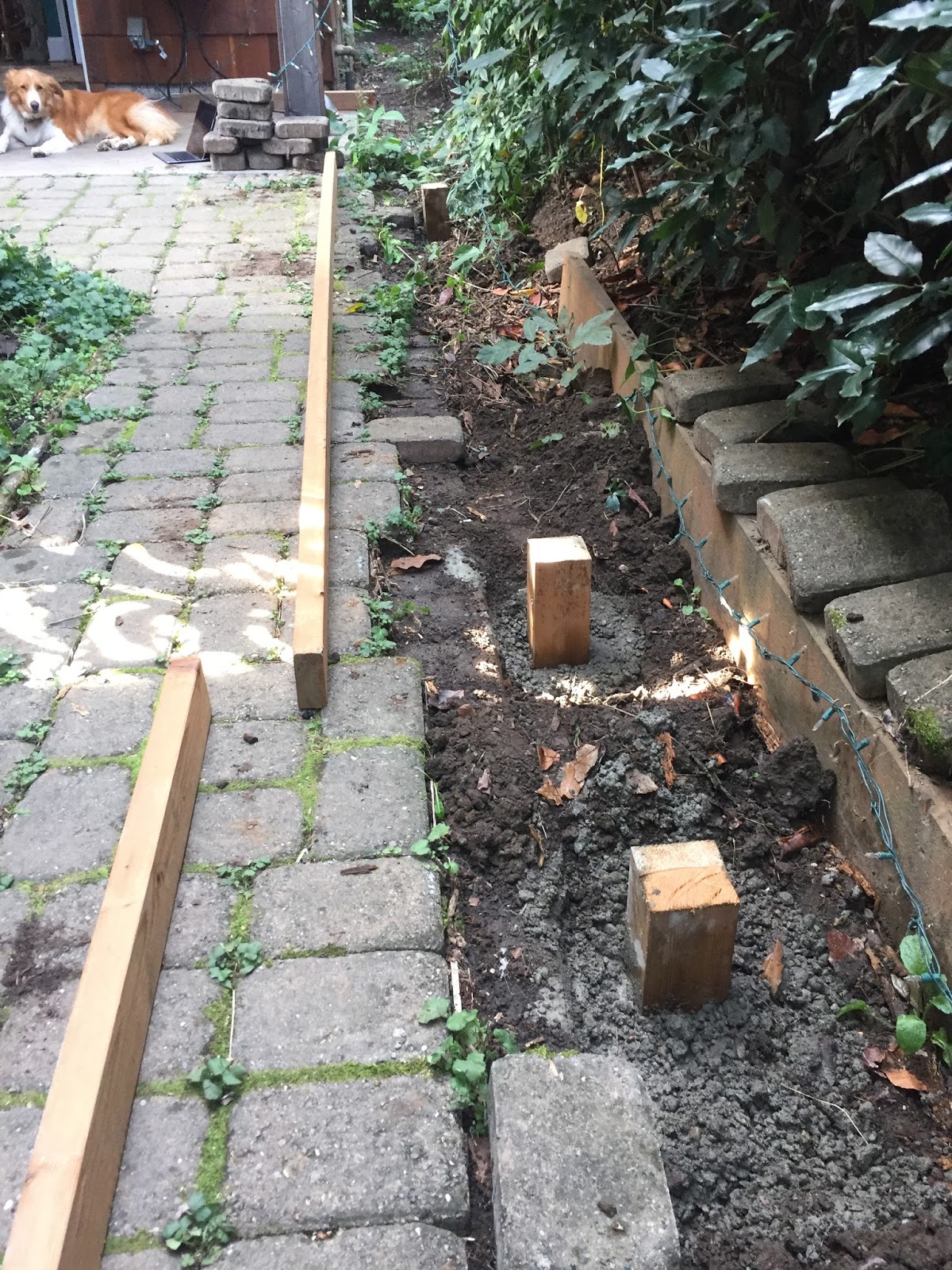
Meanwhile, the permeable pavers we laid along our pathway to the ADU needed some attention. The pathway border edging I had used, composed of salvaged 2"x 8"cedar boards from an old deck I removed when clearing room for the ADU in 2011, had started to rot out.  The pavers had begun to sprawl outwards, busting through the rotting wood, and creating many widening cracks. So, I removed the rotting borders, and replaced that wood with pressure treated wood, and braced the edging with 4x4 posts, anchored in concrete. I reveled the pavers and they're looking great again.


I figured that these two landscape updates, while somewhat mundane, were noteworthy enough that I'd post about them in my attempt to fully convey the details of ADU development.

On a less mundane note, I'm proud to announce that I'm working on a book about ADU development. I've completed the first draft, in fact. It's been quite a process to write so far, and it's still a ways from being complete.

But, when it's done, it's going to be good, noteworthy, and valuable to people who are interested in developing an ADU. It will also serve advocates, wonks, officials, and regulators who would like to understand the ins and out of municipal policy and regulations that dictate the potential of ADUs in a given jurisdiction. It will be the first book of its kind, focused on ADU development.

Sunday, October 11, 2015

Re-Staining the Cedar Shingles and Waxing ADU Poetic

I had heard that cedar shingles needed be restained every couple years. A couple months ago, I looked back and realized it's been four years since we finished building the ADU. Whoops.

The stain had started to look tired; the siding needed a makeover. The shingles had lost some of their waterproofing capability and the portions of the structure that experience direct sunlight had started to visually deteriorate. Cedar shingle siding can last as little as 10 years if not maintained, and 40 years or more if it is.

Thursday, April 16, 2015

Spring 2015 ADU Announcements

Here's a few ADU-related activities that I'm helping to head up this spring.

Build Small, Live Large: Portland’s Accessory Dwelling Unit Tour – Spring, 2015

Announcing the 2nd Build Small, Live Large, Build Small, Live Large: Portland’s Accessory Dwelling Unit Tour – Spring, 2015. The tour will be two days long this year, and will have twice as many ADUs as last year. The tour dates on Saturday, May 30th (NE Portland) and Sunday, May 31st, in SE Portland. I'll be teaching a Friday evening class on May 29th. Attendees can register to attend whichever portions interest them.


BUTTON

It's very likely to sell out early, so if you're interested in attending, don't wait too long to purchase tickets. In case you can't make this one, note that we'll be running another ADU Tour in the fall of 2015, on November 7th, 2015.

ADU Specialist Accreditation for Realtors

Earth Advantage is going to start an ADU designation this spring as an add-on to their Earth Advantage Broker designation. If you're a realtor who has taken one of my ADU classes, you'll be eligible to take an exam to receive the specialist accreditation. Earth Advantage will reach out to those who have taken one of the classes to notify them of this new add-on designation.

On the class admin front, we're also going to start offering CCB credits for contractors who attend either of these classes.

Accessory Dwelling Strategies, LLC

I've started an LLC dedicated to ADU related work called Accessory Dwelling Strategies, LLC. This company is designed to help others build ADUs.

Along with the homeowner and realtor ADU classes, I also do on-site consultations with people who are interested in building an ADU on their property. The classes cover a huge amount of information which is intended to synthesize everything I wish I'd known before I started to plan for my ADU. The on-site consultations are useful for providing more customized feedback on-site. Many ADUs have a unique set of design criteria, site constraints, and financing models. The purpose of the individualized consultations is to distill an extensive amount of information about what has worked and why, and what doesn't work and why.

Contact me through my Google profile page or email me at kolpeterson at yahoo dot com if you'd benefit from a one-on-one consultation. I also offer ongoing consultations throughout the ADU planning and design phase of the project for a fixed rate. See ADU Class page for more information.

Monday, September 15, 2014

All About ADUs - A Primer Course for Brokers

Starting this fall, I'm going to be teaching a new 4 hour ADU course designed for real estate professionals through the Earth Advantage Institute. If you know of realtors who may be interested in this class, please let them know about it. More information about the ADU course is available here.


In case you missed the ADU tour announcement on AccessoryDwellings.org, my company Caravan-The Tiny House Hotel will be running another city wide tour of ADUs at the end of May. So, we’re starting to look for candidates for the tour and here’s what we’re looking for:
  • Recently permitted and completed ADUs in inner Portland.
  • Homeowners who are willing to open their ADU to hundreds and hundreds of visitors. The hosts from the last tour said that hosting was one of the best experiences of their life. Many hosts compared the experience to their wedding day—no joke.
  • The homeowner must be willing to have their ADU profiled on AccessoryDwellings.org. This profile involves sharing the design/build costs–so there’s a degree of transparency that is required by owners, in order to make the tour useful for attendees. 
Lastly, an article was published in Portland Business Journal that correctly differentiates ADUs from tiny houses on wheels. Oftentimes, media conflates these two building types when in fact, they are completely different from each other. Since I have my feet submerged in both ADUs and tiny houses on wheels, it was good to see an article that actually differentiated the two. 

Wednesday, May 7, 2014

Build Small, Live Large- Portland’s Accessory Dwelling Unit Tour- Sunday, June 1st, 2014

Update 5/28/14: There's been a huge amount of interest in attending this tour, which is fantastic. Over 800 people have registered to attend. 

To allow for ample access to the ADUs for attendees, we have decided to cap the ticket sales.  Tickets sales have now ended. We really wanted to sell more, but feel that this cap is in the best interest of the tour registrants and the ADU hosts. 

This blog focuses on the design/build process for my ADU. Occasionally, however, I make other ADU related announcements that will be of interest to readers. In this case, I'm very excited to announce Build Small, Live Large- Portland’s Accessory Dwelling Unit Tour. This will be the first tour of its kind, and promises to be a fantastic event.

This ADU, ten other finished ADUs, and one under construction, will be featured on the tour. Homeowner, architects, and builders for the ADUs will be available to answer questions. There will also be a series of expert presentations held throughout the day. Additionally, attendees will be able to see eight tiny houses on wheels.

The day will jam packed with small and tiny houses, networking opportunities, and access to ADU professionals and experts. If you're planning to build an ADU, this tour (and the ongoing ADU classes I offer) are the best ways to learn from others about the ADU designing, permitting, and building process.

Here's the press release from Caravan- The Tiny House Hotel, about the tour.


Caravan- The Tiny House Hotel, in partnership with the Oregon Department of Environmental Quality, the City of Portland, and Metro, is hosting Portland’s first citywide tour of Accessory Dwelling Units on Sunday, June 1st, 2014 from 10am-6pm. ADUs are secondary living units on single-family lots.  Modeled after the City of Portland’s Build It Green Tour, Build Small, Live Large: Portland’s Accessory Dwelling Unit Tour offers attendees the rare opportunity to see the interiors of eleven ADUs in a variety of locations across the eastside of Portland. The self-guided tour gives attendees access to the homeowners, builders and designers of the ADUs, and to comprehensive, educational case studies about the building process of each ADU. There will also be workshops throughout the day presented by local and national experts about a range of topics related to ADUs, from permitting and financing, to designing and building.

Portland has seen a six-fold rise in the number of ADUs built since 2010.  This dramatic increase is the result of a 2010 City of Portland waiver of System Development Charges, which reduced the cost of building permits for an ADU by up to $11,000.  Before the 2010 waiver, approximately 30 ADUs were built in Portland annually, but in 2013 alone, there were almost 200 ADU permits applications.  The waiver’s popularity caused the Portland City Council to extend the waiver until July, 2016, spurring local ADU leaders to develop Portland’s first ADU tour.

Throughout the day, attendees will also have the opportunity to tour four custom-built tiny houses on wheels at Caravan- The Tiny House Hotel. Caravan has received national media attention for being the first tiny house hotel in the United States. Caravan will host a late afternoon networking event from 4-6pm where attendees can meet local advocates, designers, builders and leaders of both the ADU and the tiny house movement. Real estate professionals can earn up to 6 CE credits. Attendees will have the opportunity to earn a special $25 discount to stay at Caravan, as well as enter a raffle for a free stay at Caravan.

Early bird registration is only $25. Learn more and register at http://accessorydwellings.org/adu_tour/

...or Eventbrite - Build Small, Live Large: Portland’s Accessory Dwelling Unit Tour

Thursday, February 27, 2014

Refinishing the Concrete Floors

Finishing up the ADU construction in the summer of 2011, my partner and I were attempting to make tens of good, long-term design decisions about the final look and feel of the ADU. From the placement of outlets, to the colors and style of granite countertops in the kitchen, to how to build attractive built-in cabinetry in the bedroom cheaply, there was so much to figure out quickly.

Having never worked with concrete, I was at a loss about how to correctly finish the concrete. I went to Home Depot and found a concrete stain and was able to easily apply a beautiful, rich red stain to the floor with a roller brush. Then, I applied a sealant, and voila, within a matter of hours, the drab grey concrete was a glossy red. It looked awesome.


Fast forward 2 years, 6 months, and I was no longer so psyched about the wonderful looking concrete floor. Over time, the stain gradually wore off to the point where it diminished the aesthetic of the ADU. It was a cool process to observe where it wore off . Any guesses where the it came off quickest? Answer: The kitchen- where we apparently spend the most the time walking around.


At first, there were just little white nicks, but eventually, the concrete looked ragged. I was frustrated because I'd stained and sealed the floor, but I came to learn that the product that I'd used wasn't really an absorbent stain; it acted more like a paint. And, like paint, it eventually peeled off. 

In January, I decided to bite the bullet and re-do the floor altogether. I researched options on how to refinish concrete floors, and eventually learned that the only viable approach to getting a good finish on the concrete floors would be grind down the existing surface. Then, we would have to re-stain the concrete with an acetone mixture that would actually penetrate the surface and stain the top 1/8" of concrete. 

The process included grinding down the existing concrete with a 4 grit, 8 grit, 16 grit, 32 grit, 64 grit, all the way to an 800 grit, to give it a polished finish. The stain/acetone mixture was sprayed onto the floor into the final passes. This concrete staining process is referred to as acid-etching. Lastly, a very thin protective was layer was applied. 

To prep for this job, we had to move everything off the ground floor of the ADU. Then, we took off on a road trip for the long weekend, and let professional concrete contractors work their magic. A big part of their job was taping off the entire first floor so that the concrete dust wouldn't cover everything. They were extremely thorough, nonetheless, concrete dust still managed to seep through and coat some of the walls. 


Here are pictures of the process. They spent two long days re-doing the 500 sq ft concrete floor. When they were finished, the floors looked awesome, as shown below. Unlike the paint-like stain process I did initially 2.5 years ago, this new stain should remain looking glossy and rich for years and years to come. 


This job cost $2,500. It wasn't cheap. I asked the contractor how much this job would have cost if I had hired him outright at the beginning. He said it would have cost the same amount, which surprised me. So, in the end, my initial stain job wasn't a mistake that ended up costing me more money. Rather, it simply required some additional work to move everything out of the house for the weekend. 

In hindsight, I would have sought and asked for a concrete foundation company that would have been willing and able to do all of the concrete work, down to the polished finish, and sought input on how best to get to the final glossy look that I was seeking initially. This would have allowed me to avoid the annoyance of refinishing the concrete floors. Like many building trades, concrete work has a lot of specialized processes, and I have found that having specialists scope out, advise, and in this case, execute the project, was critical to getting a final product that met my expectations. 

Thursday, March 21, 2013

Energy Use Over the Last Year In the ADU

In earlier posts, I shared how living in smaller spaces reduces per capita energy consumption, which was part of my motivation for living more compactly. Furthermore, after constructing an energy efficient ADU, Energy Trust of Oregon even gave me a $1,750 rebate for meeting Northwest ENERGY STAR standards and achieving a modeled Energy Performance Score of 35. 

Now that I've lived in the ADU for over a year, I wanted to share the actual energy bills, and compare them to the energy bills of the main house. Comparing the utility bills of the two dwellings will allow me to draw a few conclusions regarding the nuanced personal energy consumption virtues of living more compactly.

Both homes are heated by natural gas. The ADU is heated via a tankless water heater and in floor radiant hydronic heat. The main house, built in 1906 and recently weatherized, is heated through a conventional forced air heating system.

Below are the natural gas bills for the ADU and the main house, respectively. The ADU consumed 277.5 therms, and the main house consumed 930.4 therms. A "therm" is a unit of heat equal to 100,000 British thermal units.
The total therms used in the last year in the ADU
The total therms used in the last year in the main house
At only 277 therms, the ADU used only 29% as much energy as was used by the main house for heating!

That's very cool, but that's not the real story. 

The real story must include the total energy use divided by the number of occupants. The designed occupancy level is calculated by taking the number of bedrooms in the house, and adding one additional occupant. This designed occupancy level assumes that two adults are living in a 'master bedroom' together.

The ADU is a one bedroom dwelling designed for two people. And, in fact, that is exactly what happened in the ADU;  two people lived in the ADU for the full year. 

The main house is a four bedroom house, with a designed occupancy level of five people. However, in reality, the actual occupancy rates of the main house were lower than the designed occupancy level; the main house maintained an average of three occupants throughout the year. 

Interestingly, census data shows that the average national occupancy rate for homes larger than mine at 1,700 sq ft, is surprisingly low. The average occupancy rate for homes of 2,500 sq ft is actually only 2.59 occupants.

So, let's look at the therms used per capita for both the designed occupancy and the actual occupancy.


If the main house were occupied at the design occupancy rate, each ADU occupant would have used 75% as much energy as the average resident in the main house. Living in the Northwest ENERGY STAR certified ADU would have been 25% more energy efficient than living in the main house.

But, in reality, with only three occupants in the main house, the actual therms used per capita for heating and cooling in the ADU was still 138.75, but the actual therms used in the main house was 310.13. This means that by residing in the ADU, I used only 44% the amount of energy that the average occupant used in the main house. Living in the ADU has been, in reality, 56% more energy efficient than living in the main house.

These are significant data points. Here are the stories that these data points tell us:

#1) Building the new structure to Northwest ENERGY STAR standards resulted in building a very efficient building envelope and in choosing to use efficient heating systems.

#2) By living at the designed occupancy in the ADU, my partner and I each lived more energy efficiently. Building a smallish dwelling alone did not make the dwelling energy efficient. It was dwelling in a smaller footprint per capita that had the most substantial energy efficiency impact.

Said another way, if I lived alone in the ADU, and the main house was fully occupied at the design occupancy of five people, I would have actually used 50% more energy than the average resident in the main house.

#3) In smaller dwelling spaces like my 800 sq ft ADU, I was prone to live at the designed occupancy level of two. Conversely and representatively, the main house was prone not to be fully occupied (according to US Census data).

These last two points are a thinking person's fodder for a housing revolution.

-----------------------------------------------------------------------------------------------------------------

I'm also including my electrical bills from the last year for reference. Since neither the ADU nor the main house used electricity as the primary heat source (where the bulk of a home's energy is used), these data points are less relevant.

That said, indeed, the ADU was more efficient than the main house in terms of electric power consumption due to the types of appliances and light fixtures that were installed. But, one will still draw a similar conclusions that I have drawn above regarding designed and actual occupancy

Under actual occupancy rates, living in the ADU used 30% less electricity per capita than living in the main house.        Under designed occupancy rates, living in the ADU would've used 18% more electricity per capita than in the main house.
In terms of electricity, the ADU was more efficient under actual occupancy rates. But, if the main house was occupied by five people, the electricity use per capita in the main house would have actually been lower than in the ADU.

Electricity used in the last year in the ADU


Electricity used in the last year in the main house


Note the July spike in electricity use in the main house and the lack of a spike in July for the ADU.

The main house is set in direct sun, has R12 wall insulation, and has an AC unit.

The ADU is kept cool through deciduous tree shading, R33 wall insulation, and a ceiling fan. :)

Thursday, February 21, 2013

One Data Point for the Property Tax Impact of an ADU

My property tax appeal was successful. My property taxes were officially lowered from $4,021.75 to $3,154.21 for 2013.

Adjusted tax statement from Multnomah County

This is still a big increase from my 2012 tax burden of $1,599.43, but it's a fair increase based on Multnomah's tax code. 


Property taxes before and after the ADU was added to the lot

For others who are considering the fiscal impacts of an ADU to their current property tax, the important numbers to note in terms of possible tax increases are that my ADU cost  ~$100K to build, it was valued at ~$90K by the county, and that this additional 'real market value improvement' increased my taxes by ~$1,500.

A property tax increase post-ADU, should be proportional to the contributory value of the improvements. Using my increased tax figures as a baseline, and assuming that I understand Multnomah tax code correctly, if an ADU adds between $50K-$150K of contributory 'real market value' to a property, the property taxes would go up proportionally from ~$850-$2,550/year.
To figure out how an ADU may impact your property tax if you're in Multnomah County, simply multiply the assumed increase in assessed property value by 0.017. That will tell you approximately how much your taxes will increase after you've added an ADU to the property. 

And take my formula with a grain a salt be cause I am just a guy with extra time on his hands and MS Excel.

Wednesday, January 9, 2013

Successful Appeal of the County's Initial Assessment of the Contributory Value of the ADU

In my last post, I described how the county attributed approximately $142K of contributory value from the new ADU. This translated to a HUGE annual property tax hike; from $1,599 to $4,021.


What I didn't describe in that post was that upon receiving the County letter in the mail, I immediately gathered together evidence that my ADU was actually worth far less (it is worth ~$100K) and wrote an appeal to the County Board of Property Tax Appeals. I submitted the appeal package in full the following day at the County tax office.

When I spoke with the kind lady behind the County desk, she informed me that the assessor, who I'd allowed into the property, had noted in his records that I had added a 1,350 sq ft ADU. Given that the City of Portland's regulations only allow ADUs of up to 800 sq ft, I had evidence to prove that his spatial calculations were necessarily off target by ~68%. I also learned that the County assessor likely applied a simple numeric formula to this miscalculated sq footage to come up with the obscenely high contributory value for the ADU of $142K (eg. 1,350 sq ft x $105 sq ft= $142K).

A couple months after submitting my appeal paperwork, a 2nd assessor contacted me and visited the property. When he arrived, he explained that he had read through my appeal documentation, which had included a full copy of a 3rd party appraisal. Upon visiting and measuring the property, he concurred that the initial assessment of the size of the ADU seemed incorrect and he shared that he'd never seen an ADU add more than $100K to the value of a property.

It's worth noting that the initial County assessment apparently included the ADU attic space in his sq footage calculations, whereas the City did not count the attic as living space. The 2nd assessor agreed that the attic should not be counted in the sq footage calculations.

It's also worth noting that the County assessment includes the total building footprint (i.e. the exterior walls) in the sq footage calculation, whereas the City only counts interior space (i.e. drywall to drywall). The County includes exterior dimensions because assessors must be able to assess the building from the outside since homeowners aren't required to allow assessors entry into the home and many homeowners deny entry. These two variables help explain why the first sq ft assessment was so off target. However, I never would have known about this sq footage miscalculation had the kind lady behind the desk not mentioned it; this 1,350 sq ft figure wasn't in the initial letter they sent.

Today, I received an updated property tax assessment in the mail, which I am happy to report, accurately attributes ~$90K of contributory value from the ADU to the property, $53K less than their initial assessment!


The "From" column relates the 2013 figures from the "This Year" column in the first image at the top of this post.

The "To" column shows the new figures according the 2nd assessment, which will override the initial assessment.

Whereas the initial assessment indicates the market values of the structures (main home and ADU) at $320,600, the new assessment has the market values of the structures at $267,600. The new assessment values the ADU at ~$90K, which tracks perfectly with my cost of construction and my private appraisal.

I don't yet have a newly updated tax bill, so I don't know what my actual annual taxes will be. But, I estimate that the updated tax on the property will probably come be about $3,100/year. Once I receive the final property tax bill, I'll post it for all to see.

If my estimate is correct, this will be $1K less per year than the initial County tax assessment. It is still a $1,500/year increase to the property tax, a two-fold increase from what my taxes had been before I built the ADU. But, based on the County tax regulations, this new property tax burden seems fair and reasonable.

Wednesday, October 24, 2012

Property Taxes for the ADU

Many people have inquired about how the ADU effected my county property tax. Up till now, I had no idea how the addition would impact it. Even the county's appraiser who inspected the ADU last spring couldn't give me any sense about the impacts of the ADU on my overall taxes.

I finally have an answer: It is raising my taxes a lot! In my case, it's raising my property taxes by $2,422.32. Said another way, it's more than doubling my property taxes (a 2.5X increase to be exact).


Whereas before, the total value of my property's structures (just the main house) previously were $177K; now, with the ADU added to the property, the county is assessing my property's two structures (the main house and the ADU) at $320K. I assume of course that the vast majority of that $142K increase in the county's structural valuation is attributable to the addition of the new ADU.

This doesn't reconcile with what a private appraiser found as the worth of the property with the ADU addition. In fact, this county valuation is over 50% higher than what the appraisal said.

This property tax anecdote should be considered with a grain of salt, as each property has unique attributes and history that would effect how an addition would increase the tax burden. With ADUs being relatively rare, this story can serve as one reliable data point. However, there are many factors than play into property taxes, so I won't speculate as to how this data point compares with other properties that have ADUs.

And, it's important to note that this relatively huge new property tax burden does not hold a candle to the very tangible financial benefits provided monthly or annually by having the ADU.

If ADU Financing is of interest to you, I encourage you to attend the Build Small, Live Large Summit this Friday, October, 26th. I'll be speaking on a panel entitled Financing the Accessory Dwelling Unit.

Wednesday, September 19, 2012

Finishing The Stairs

(Editor's note: I've authored a related post called Staircases in ADUs on AccessoryDwellings.org)

I'm authoring this post a year after we completed building and moving into the ADU. Dare I say, this is the last substantial construction project for my ADU.

Over the last year, Deb and I have slowly tackled various projects which I've described previous blog posts (the artistic sound barrier, the artistic handrail, landscaping and more). But, as any homeowner knows, it seems as though the work is never done. Once we moved in, it was easy to let the final stair riser tiling project slip off our immediate calendar.

With the ADU being on the upcoming Build It Green tour on Saturday, September 22nd, we motivated ourselves to put the finishing touch on the stair case (the end of this post includes several ADU related announcements which may be of interest to readers).

The finished stair tile risers.


From the outset, the stairs have posed an intriguing design problem. Complying with stair codes is sometime difficult in small and stout houses, such as ADUs. Portland's code requires that an ADU roof must be no taller than 18ft at its mid-point, so fitting a stair with adequate head room (6' 8") on the top stair landing, can prove to be a tricky design challenge.

There are two common design solutions. One can position a straight, simple staircase in the middle of the house, which can interfere with the spatial layout of the main floor. Or, one can position the stairs along the side of the house, and turn the top of stairs toward the center of the house before you reach the 2nd floor landing to avoid hitting your head on the ceiling.

My architect worked through many sketches before finally figuring out a functional, compliant, attractive, and space-efficient staircase design, consisting entirely of "winders". The final stair design consisted of 14 "winders": stairs which are not rectilinear, but have an angled curve as they rise upwards.

This is the architectural drawing of the winding stairs from above

The master framer would built this stairs claimed to have build over 2,000 stair cases and said that he had never built a staircase in which every step was a winder. It was a wonderous feat to watch how he constructed the framing for them.  


In addition to the unique bend of the staircase, we added a few other design elements to the staircase. When staining the stairs, we stained the nose of each tread a lighter color so that it would be easier to see each tread in lower light. Additionally, we added an LED rope light under the nose of the treads, to create an attractive perimeter/safety light solution for climbing the stairs in low light.

The LED rope lighting under each tread accents the stair below it. The nose of each tread is stained a light color in contrast to the rest of the tread, which makes each tread "pop" nicely in any kind of light, such as the low light as shown above.

Then, we added the amazing salvaged steel handrail, part of which is shown below.

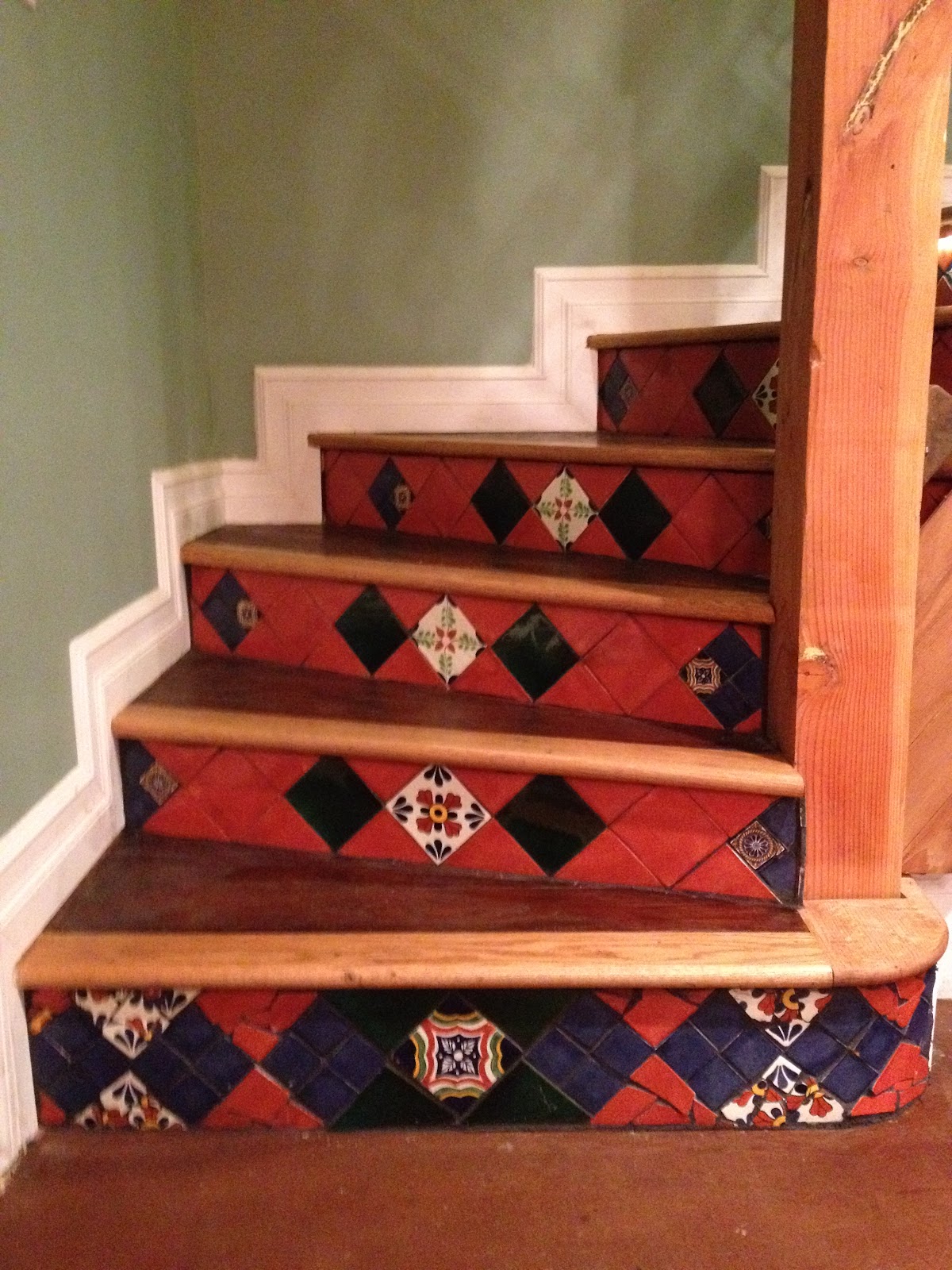
Last but not least, we finished the stair risers with tiles this week. We acquired these tiles in New Mexico last year, knowing that we wanted to eventually finish the stair risers with Talavera tile. Here are some pictures of the process and finished product.


Here's a video of the finished product.


Some other ADU announcements:
  • The next ADU Class for Homeowners will be on Saturday, November 5th. This course is filling up so I'll likely offer another full day class shortly thereafter.
  • For the first time, I'm also able to offer CE credits to Oregon's real estate professionals who attend this class, thanks to the Earth Advantage Institute. The class will equip them with substantial knowledge about ADUs, enabling them to help more of residential clients identify suitable properties for ADUs, and provide information on how a residential client can proceed through the ADU financing,designing, and building process.  Please tell Portland realtor acquaintances about the class.
  • There will be a one day ADU-focused conference in Portland, Oregon, on Friday, October 26th, held in conjunction with the Portland EcoDistricts conference. I'll be helping lead one session on ADU financing, and there will many fantastic sessions there. 
  • Lastly, my ADU was featured in a great blog called Small House Bliss which I'd commend to readers who are seeking inspiration on modern, small house design. 

Tuesday, June 26, 2012

An Artistic Sound Barrier

Residents and architects know the importance of visual privacy, but the psychological value of sound privacy is often forgotten in building design.

In attached dwellings, sound transfers between adjacent structures. Hotel guests have experienced the lack of adequate sound privacy between room walls, and apartment building residents may have been subject to the sound of their upstairs neighbors' footsteps. Indeed, sound privacy is an attribute that helps makes detached ADUs preferable to attached units.

In contrast, detached ADUs can be quiet urban retreats due to not sharing structural walls with another unit. My ADU has thick, insulated walls, which deaden the sound of the busy city that surrounds it. But, inside the exterior walls, sound travels freely.

A collage of images of the finished artistic sound barrier
Why is Sound Privacy Relevant to ADUs?


Good small house design attempts to make a place feel large despite the smaller size. This is accomplished by designing a relatively open floor plan. This means conjoining the living room, dining room and kitchen, into a "great room". Vertically, ceilings are lofted, and ideally, parts of the 2nd floor ceiling should also be visible directly from the ground level to create an illusion of grandeur.

Clean indoor air quality design utilizes hard surfaces instead of rugs and carpets, which tend to trap atmospheric deposition and dust mites (and their excrement), collecting and exporting particulate matter into the ambient indoor air that we later breathe.

Deliberately utilizing both of these design techniques, our ADU had both an open floor plan and hard surfaces (concrete and hardwood floors). Unfortunately, when coupled, the byproduct of these two design techniques was noise reverberation from one room to the others. Sound tended to reverberate off of the hard surfaces and it traveled easily from one open room of the house to another.

Prior to building, I wasn't sure how the sound would behave in the ADU, but while living in the ADU over the last ten months, I have experienced it first hand. Noise transfer has actually caused me to loose sleep this year- no laughing matter for a lover of sleep.

For example, if my partner woke up and quietly made coffee while I was sleeping, it was audible enough that it woke me up. If I watched a movie downstairs at night, it was very easy for my partner to hear it from the bedroom. When my dog was lying in the living room scratching behind her ears, it jingled her metal name tag and it was like she was shaking a tambourine.

In the design phase, we'd considered the possible audio impacts of the vertically open floor plan, but thought that it would be wise to actually live in the ADU before making a decision about whether, and how, to enclose the bedroom walls to prevent the transfer of sound from the downstairs to the bedroom.

Arriving at the Sound Barrier Design Solution

My partner and I loved the look of the opening to the bedroom, but it wasn't worth continuing to lose sleep over it.  Our design goal was to develop an artistic sound barrier that would still let light pass through the house, but that would cut down the amount of reverberating noise into the 2nd floor bedroom. I worked with a Portland craftsman and friend, Eric Bohne, to develop, design, and execute a functional design to visually fit alongside the stunning metal handrail and the alternating tread staircase to the attic.

After many iterations of design ideas (which I won't bother to describe, but you're welcome to see in the photo and video collection below), we settled upon a design that would accomplish the desired goals. We decided to use stained glass as the medium, structurally connect the pieces with a steel frame. This captioned photo and video collection shows the chronological steps of the design, building, and installation process. There are ~65 pictures and ~5 videos in this collection.


The finished piece would look like a sunburst of textured, rich colors from a bejeweled sun. Beyond the window centerpiece, stained glass rays would graduate from semi-opaque to semi-translucent toward the outer frame. Here is a photo of the operable window centerpiece:

A beveled gem, enshrouded by a colorful burst of clear bevels and richly toned stained glass, composes the focal center of the metal and stained glass sunburst sound barrier.
Here are images of the artistic sight lines created by the finished sound barrier in varying lighting conditions.


To accomplish this design, Eric built a precisely-measured frame from steel tubing. I hired a talented glass worker, David Schlicker to do the complex stained glass elements. Together, Eric and David created a piece that accomplished the design goals- it deadened the sound transfer but still artfully allowed light through, creating an artistic piece that augmented the space, rather than detracting from it.


Before and after images of the sound barrier. These images are taken from the kitchen below.

Before and after images of the sound barrier. These images are taken from the bedroom side.

This five-minute video shows the stained glass piece in completed form, and details the architectural and design aspects of the stained glass and the layered construction method that was used to minimize sound transfer.


In this five-minute video, David goes into detail about the types of glass used in the stained glass piece. He explains each element of the production of the window centerpiece.


The whole project took two months to build. The metal frame took about a week and the glass took about six weeks. Both the metal and the glass were built off-site in the respective studios. Installation went flawlessly, and only took a few hours.

While on the topic of artistic sound barriers, I recently built a hatch door for the attic. This gives both visual and sound privacy for guests who sleep there occasionally. Here is a two-minute video that shows what the hatch door looks like and how it works. It's built from a salvaged wooden door that match the other doors in the ADU.

Saturday, May 26, 2012

Open-Sourcing the Plans

This ADU process was informed by the notion of open-sourcing. I found great ideas online, learned from others, built upon those ideas, and shared my experience so that others could build upon my experience as they (hopefully) pursue building their own ADU. In this vein, my architect and I are now sharing the ADU plans and the associated SketchUp model. This material is owned by the architect, but we hope it will serve as a useful reference for others.

Here are the basic ADU plans and section drawings


Here is the full set of ADU permit drawings


And, here is the ADU SketchUp Model.


You can see fly-through animations that I put together before construction of the ADU from this SketchUp model. The ADU ended up looking very similar to the 3D model in real life, proving the model's value as a planning tool to envision how a space will look, function, and flow. Increasingly, architectural design will use 3D modeling tools. I've praised SketchUp in previous posts because it is free and relatively simple to use.

My architect drafted fifteen schematic design phases with me before we finally settled on this final plan. That back and forth process took a couple months. I was a picky client with lofty ideas. He was a talented perfectionist who appreciated the challenge of designing so much function in a relatively small space and riffing off of my energy design goals and particular design criterion.

The result of this drawn-out design process paid off. The space-efficient design makes the ADU highly functional, and the lofted nature of the 1st floor ceilings and cathedral ceilings throughout, make it feel very large. The ceilings are 9ft in the living room, and over 20ft in the grand room. The kitchen, dining area, and living space, are visually separated by the ceiling and paint colors, but most areas of the house have 25ft views.
This photo is taken from the dining area on the 1st floor, looking up past the 2nd floor catwalk, to the towering cathedral ceiling and hidden attic space along the east side of the ADU.

The south facing window bank gives a nice vantage of tree canopies on neighboring properties, creating an illusion of grandeur. The full light french doors open the space into the sizable back yard. Yes, even on a standard sized 50 x 100 lot (the standard sized lot in much of Portland), it's certainly possible to have a large house, a full-sized 800 sq ft ADU, and still have ample garden/landscaping space.
Bank of south facing windows and french door, visually connecting the interior space to the backyard
The ADU is 21ft wide and pushed up against the 5ft setback requirement for new buildings in Portland. This still left half of backyard for us to use for fire patio, an outdoor patio table set, a grassy area, plants, a covered awning with a chair swing, and more.

The deciduous canopy on the south side of the ADU was a major part of the design consideration.

Every ADU is different from the next. Since most ADUs currently are built by the current homeowners; they are custom-tailored to the homeowner's desired use. ADUs are often accented with custom craftsmanship that adds further textured interest to the small space. This level of detail results in quaint, intimate, and beautiful, customized structures. Beautiful structures will be cherished, and will be tended to by their owners over time. Unlike much conventional spec-housing stock, beautifully designed ADUs, executed under the watch of astute and financially-vested homeowners, are likely to last for generations, ultimately resulting in less residential construction landfill waste and less wasted energy.
Related Posts Plugin for WordPress, Blogger...